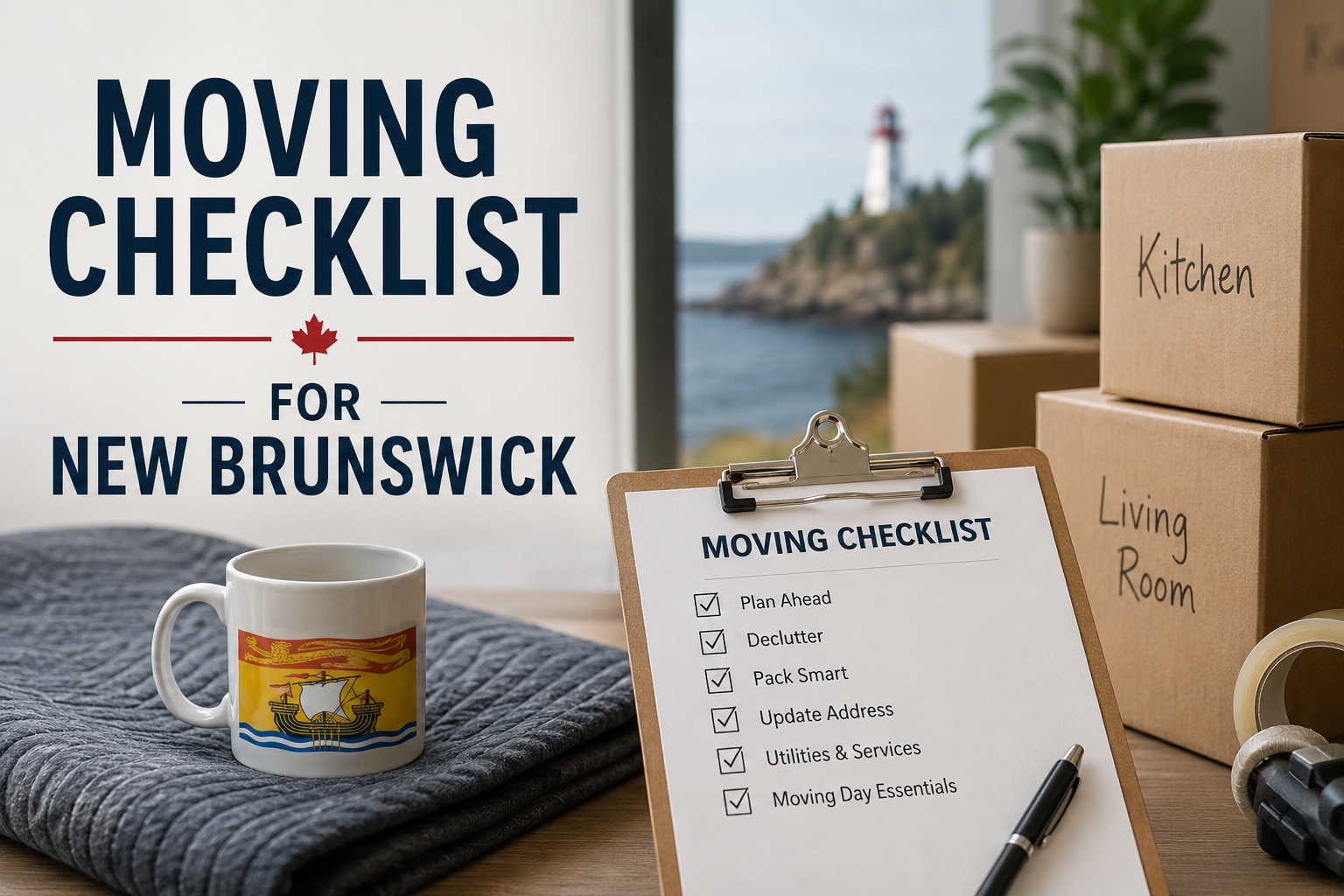
Moving Checklist for New Brunswick
This moving checklist for New Brunswick is designed to help homeowners, renters, and families stay organized before, during, and after a move. From planning and packing to moving day preparation, following a structured timeline can help reduce stress and prevent common mistakes.
Moving to a new home takes planning, organization, and preparation. Whether you are relocating within Moncton, moving to another part of New Brunswick, or arriving from another province, having a clear checklist can make the process easier to manage.
This guide walks through the important steps before, during, and after your move. It includes practical timelines, packing tips, local considerations, and moving-day preparation advice for New Brunswick residents.
Table of Contents
Why a Moving Checklist Matters
A detailed moving checklist helps reduce missed tasks and last-minute problems. It also helps you stay organized throughout the moving process.
A checklist can help you:
- keep track of deadlines
- organize packing room-by-room
- schedule moving services early
- transfer utilities on time
- avoid forgotten address changes
- prepare properly for moving day
Moves often involve dozens of small tasks. Breaking everything into manageable steps makes the process easier.
Moving Checklist for New Brunswick: 8 Weeks Before Moving Day
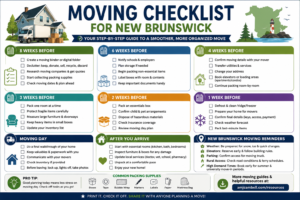
The earlier you begin planning, the smoother the move usually becomes.
Create a Moving Binder or Digital Folder
Keep important moving information in one place.
Include:
- moving estimates
- receipts
- contracts
- utility account information
- contact numbers
- packing lists
- scheduling notes
Decide What to Keep
Moving is a good opportunity to reduce clutter.
Go room-by-room and separate items into:
- keep
- donate
- sell
- recycle
- discard
Reducing unnecessary items can lower moving costs and simplify packing.
Research Moving Services
If you plan to hire movers, start comparing companies early.
Look for movers that are:
- licensed and insured
- experienced with local moves
- familiar with New Brunswick communities
- transparent with pricing
- organized with scheduling
Many residential moves are scheduled during the summer months, which can increase demand and reduce availability. Planning ahead and understanding the moving process early can help avoid scheduling challenges and last-minute decisions.
Start Collecting Packing Supplies
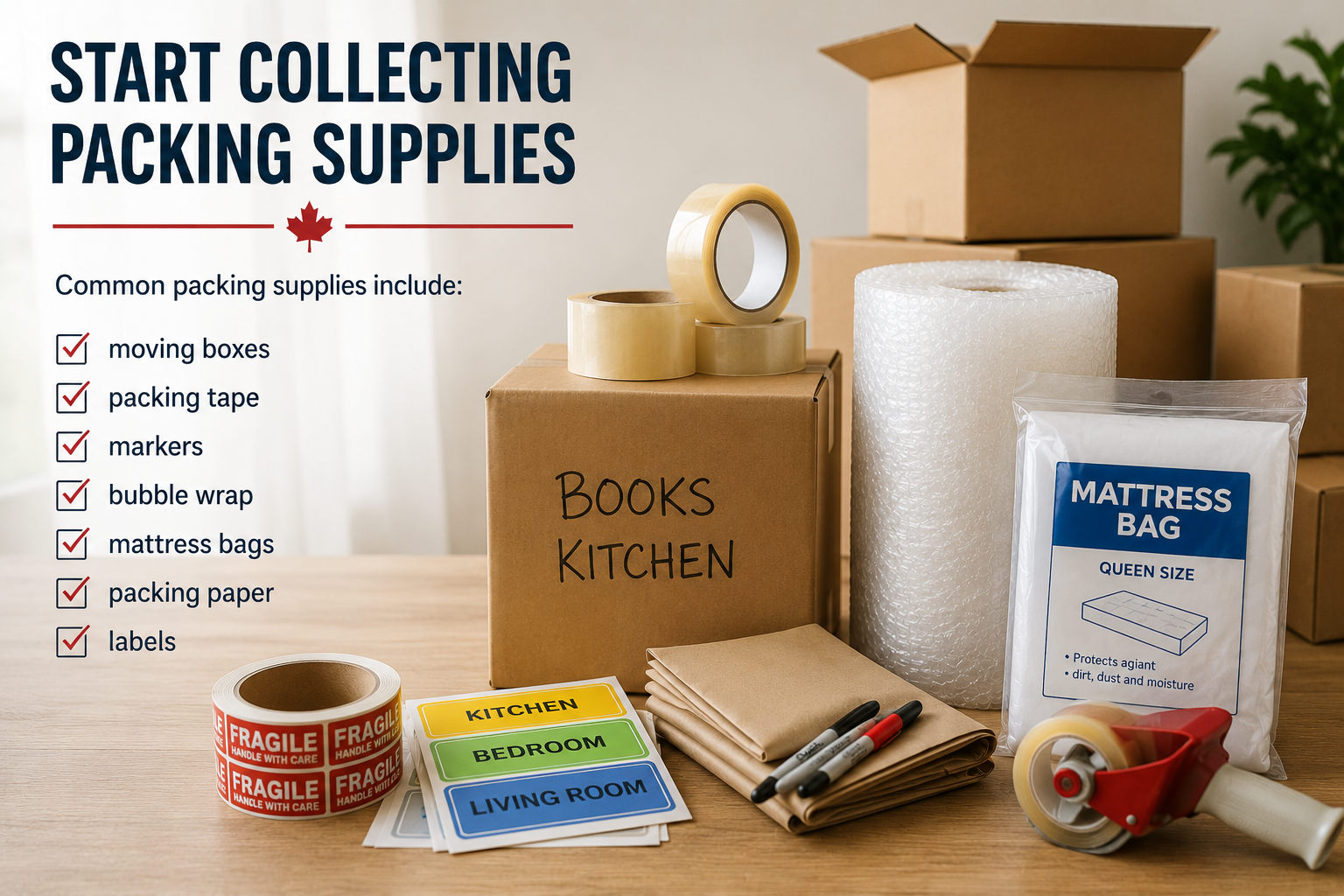
Common packing supplies include:
- moving boxes
- packing tape
- markers
- bubble wrap
- mattress bags
- packing paper
- labels
Try to keep supplies organized in one area of the home.
6 Weeks Before Moving Day
This is a good time to start handling administrative tasks.
Notify Schools and Employers
If children are changing schools, begin arranging transfers and records.
You should also notify employers about your upcoming move if scheduling adjustments are needed.
Plan Storage if Necessary
Some moves involve temporary storage between locations.
Storage can help if:
- possession dates do not align
- downsizing is involved
- renovations are planned
- long-distance moving schedules change
Storage can provide additional flexibility when moving timelines do not align perfectly. Temporary storage solutions are often used during renovations, downsizing projects, delayed possession dates, or other transitional periods.
Begin Packing Non-Essential Items
Start with items you do not use daily.
Examples include:
- seasonal decorations
- books
- collectibles
- extra linens
- off-season clothing
Label every box clearly with:
- room name
- general contents
- fragile warnings
4 Weeks Before Moving Day
The move starts feeling closer at this stage.
Confirm Moving Details
Finalize important scheduling details.
Confirm:
- moving date
- arrival times
- addresses
- parking access
- elevator bookings
- storage arrangements
Apartment buildings in Moncton, Riverview, and Dieppe often require elevator reservations for moving day.
Transfer Utilities and Services
Arrange service transfers or cancellations for:
- electricity
- internet
- water
- tenant insurance
- propane
- security systems
Do not wait until the final week.
Change Your Address
Update your address with:
- banks
- insurance providers
- CRA
- subscriptions
- driver’s license
- health card
- employer
- online shopping accounts
Canada Post mail forwarding can help prevent missed mail during the transition.
3 Weeks Before Moving Day

Packing should become more structured now.
Pack One Room at a Time
Packing room-by-room helps maintain organization.
Avoid mixing unrelated items into random boxes.
This also makes unpacking easier later.
Protect Fragile Items Carefully
Use extra padding for:
- dishes
- electronics
- mirrors
- artwork
- glassware
Clearly label fragile boxes.
Heavy items should stay in smaller boxes to reduce lifting strain.
Measure Large Furniture
Check that larger furniture fits through:
- hallways
- staircases
- elevators
- doorways
Measuring access points in advance is important whenever large furniture, equipment, or workstations need to be relocated. This type of planning is commonly used during commercial moves to help avoid delays and ensure items can be moved safely through the building.
2 Weeks Before Moving Day
Your checklist should now focus on final preparation.
Prepare an Essentials Box
Pack a box with items needed immediately after arriving.
Include:
- medications
- chargers
- toiletries
- basic tools
- important documents
- snacks
- coffee supplies
- pet supplies
- paper towels
Keep this box with you instead of loading it into the moving truck.
Confirm Child and Pet Arrangements
Moving day can become chaotic for children and pets.
If possible, arrange:
- babysitting
- pet daycare
- family assistance
This can improve safety and reduce stress during loading and unloading.
Dispose of Hazardous Materials
Moving companies often cannot transport certain items.
Examples include:
- propane tanks
- paint
- fuel
- chemicals
- fireworks
Check local disposal guidelines in your municipality.
1 Week Before Moving Day
Most major packing should now be complete.
Defrost and Clean Appliances
If moving refrigerators or freezers:
- unplug them early
- allow time to defrost
- dry completely before moving
This helps prevent leaks and mold during transportation.
Prepare Your Home for Movers
Clear pathways and remove tripping hazards.
Protect floors if weather conditions are poor.
New Brunswick weather can change quickly, especially during winter and spring months.
Confirm Final Details
Double-check:
- keys
- access codes
- parking instructions
- moving payments
- contact numbers
- weather forecasts
Good communication helps moving day run more efficiently.
Moving Day Checklist
Moving day usually goes smoother with preparation.
Before the Movers Arrive
Do a final walkthrough.
Check:
- closets
- cupboards
- storage rooms
- attic spaces
- garages
- outdoor areas
Keep valuables and important paperwork with you.
During the Move
Stay available for questions and coordination.
If using professional movers:
- identify fragile items
- explain priority rooms
- communicate access instructions
- review inventory if provided
Before Leaving the Property
Make sure:
- lights are off
- windows are closed
- doors are locked
- appliances are empty
- garbage is removed
Take photos of the empty property if needed for records.
After Arriving at Your New Home
The work continues after unloading finishes.
Start With Essential Rooms
Focus first on:
- kitchen
- bathroom
- bedrooms
Avoid trying to unpack everything immediately.
Inspect Furniture and Boxes
Check for:
- missing items
- damaged furniture
- broken boxes
Report concerns quickly if professional movers were involved.
Update Local Services
After settling in, update nearby services including:
- doctors
- veterinarians
- schools
- pharmacies
- local memberships
This is especially important for families relocating to New Brunswick from outside the province.
Winter Moving Tips in New Brunswick
Winter moves require additional preparation.
Watch Weather Conditions
Snowstorms and freezing rain can affect:
- road safety
- truck access
- loading times
- scheduling
Keep flexible timing if moving during winter months.
Protect Floors and Entryways
Use mats and towels to reduce moisture and slipping hazards.
Salt and snow buildup can create safety concerns during loading.
Keep Winter Supplies Accessible
Do not pack away:
- winter jackets
- gloves
- boots
- snow brushes
- ice scrapers
Weather conditions can change quickly throughout Atlantic Canada.
Moving Checklist for Apartments and Condos
Apartment moves often involve additional planning.
Reserve Elevators Early
Many buildings require advance booking.
Some properties also require:
- proof of insurance
- moving time windows
- damage deposits
Confirm Parking Access
Downtown Moncton and busier residential areas may require temporary parking arrangements for moving trucks.
Check access limitations ahead of time.
Common Moving Mistakes to Avoid
Many moving problems come from rushed preparation.
Avoid these common mistakes:
- waiting too long to book movers
- forgetting utility transfers
- underestimating packing time
- failing to label boxes
- packing important documents away
- not measuring furniture
- ignoring weather conditions
Good planning helps avoid unnecessary delays and frustration.
Local Moving Considerations in New Brunswick
Every region has different moving challenges.
In New Brunswick, some common considerations include:
- winter weather
- rural road access
- ferry schedules
- apartment parking
- seasonal tourism traffic
- university move-in periods
Planning around these local factors can improve scheduling and efficiency.
When should I start planning my move?
Most people should begin planning their move at least 6–8 weeks before moving day to allow enough time for packing, scheduling, and address changes.
What should I pack in a moving essentials box?
An essentials box should include medications, chargers, toiletries, important documents, snacks, and basic household items needed immediately after arriving.
How do I prepare for a winter move in New Brunswick?
Prepare for winter moves by monitoring weather conditions, protecting floors from snow and moisture, and allowing extra travel time for road conditions.
Should I label moving boxes?
Yes. Labeling boxes by room and contents helps improve organization and makes unpacking easier after the move.
What utilities should I transfer before moving?
Important utilities include electricity, internet, water, tenant insurance, and security systems.
Final Thoughts
A well-organized moving checklist can make relocating far more manageable. Starting early, staying organized, and preparing step-by-step helps reduce complications throughout the process.
Whether you are moving within Greater Moncton, relocating elsewhere in New Brunswick, or planning a long-distance move, preparation plays a major role in keeping things organized.
If you need help coordinating your move, professional moving services can also assist with packing, transportation, storage, and scheduling support.